Autumn is a sensible time to look at a roof, before winter rain and wind put it to the test. The first look does not need a ladder. A careful check from the ground, an upstairs window and the loft can show whether anything needs attention while there is still time to arrange a repair calmly, rather than after water has found its way in.
Clandon Roofing Company Ltd carries out general roof repairs, new roofs, EPDM rubber roofs and moss removal around Guildford, Woking, Leatherhead and Dorking. The checks below are for homeowners to make safely. They help you describe what you have noticed; they are not a substitute for a roofer's inspection.
Stay off the roof
Roofs are easily damaged and dangerous to walk on, particularly when they are wet, mossy or covered in leaves. Use the ground, an upstairs window or a pair of binoculars instead. Photographs taken from a safe position are often enough to show a roofer what you mean, and they record the condition before winter weather arrives.
Look along each slope and the ridge
Stand back far enough to see each roof slope as a whole. Even, unbroken lines of tiles or slates are what you hope to see. Look for anything that breaks the pattern:
- a tile or slate that has slipped out of line, cracked or gone missing;
- gaps or loose pieces along the ridge at the top of the roof;
- fragments of tile or slate on the ground, in the gutters or on a lower roof;
- growth that appears to be lifting the edges of tiles or collecting where two slopes meet.
One displaced tile can look minor from the ground, but it may leave the layer beneath exposed to driven rain. Note where it is on the house so the right area can be checked. If growth is the main concern, the article on moss on a roof explains what to consider before arranging removal.
Check where the roof meets something else
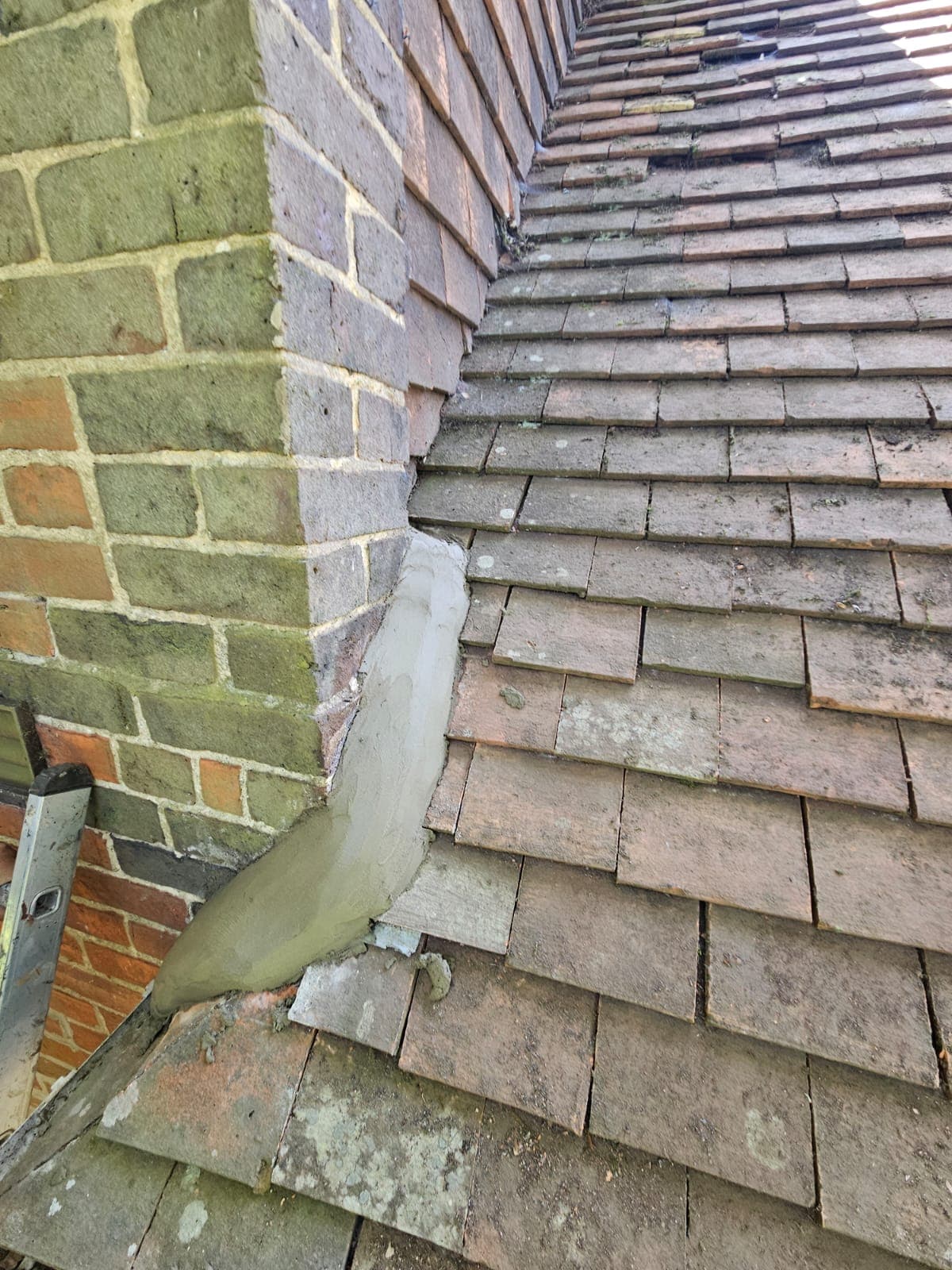
Many leaks start at junctions rather than in the middle of a slope: where a roof meets a chimney, a wall, a dormer or a lower roof. These joints are usually sealed with flashing, often lead, or with a mortar fillet. From the ground, look for flashing that has lifted or pulled away from the wall, and for mortar that has cracked or fallen out along a chimney or wall.
If you have seen damp inside, compare its position with these junctions, but do not assume the leak is directly above it. Water can travel before it shows, which is why a ceiling stain may not sit below the roof leak.
Watch the roof edge during heavy rain
The edge of the roof carries a large volume of water in a short time. During a heavy shower, look from a window or a covered spot for water spilling over the front of a gutter, running down the wall below the eaves or dripping from joints. Also note any section of gutter that sags or has come away from its brackets.
These signs do not identify the cause on their own, but they tell a roofer where to look and whether the problem appears only in heavy rain.
Look at flat roofs over extensions and garages
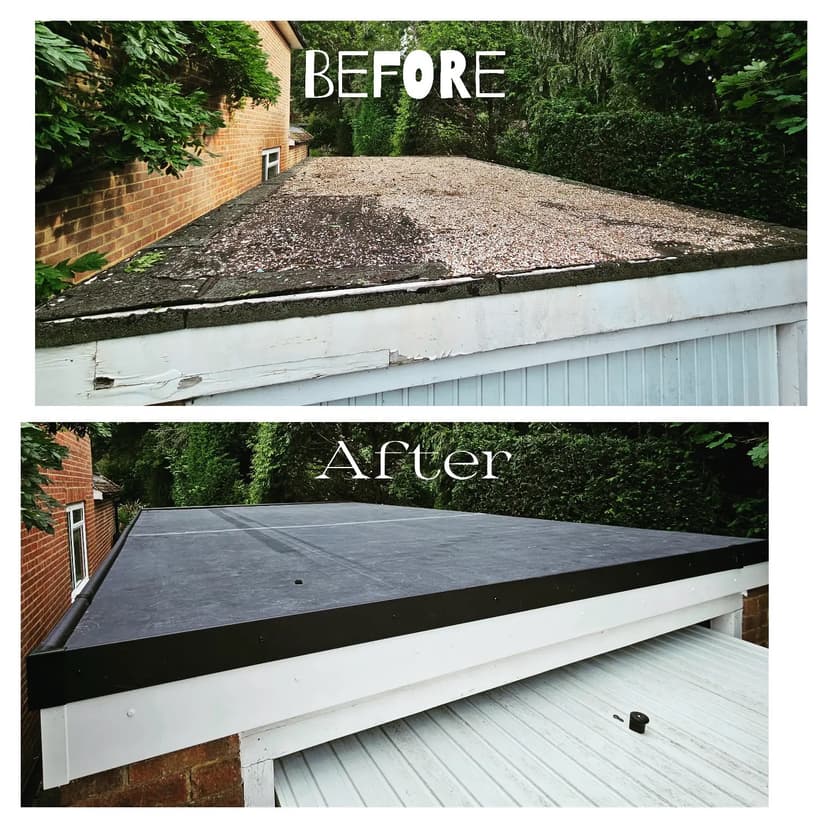
A flat roof over an extension, garage or dormer is often visible from an upstairs window. After rain, look for water that stays in pools rather than draining away, and for splits, bubbles or lifted edges in the surface. Check the edge trims and the line where the flat roof meets the house wall.
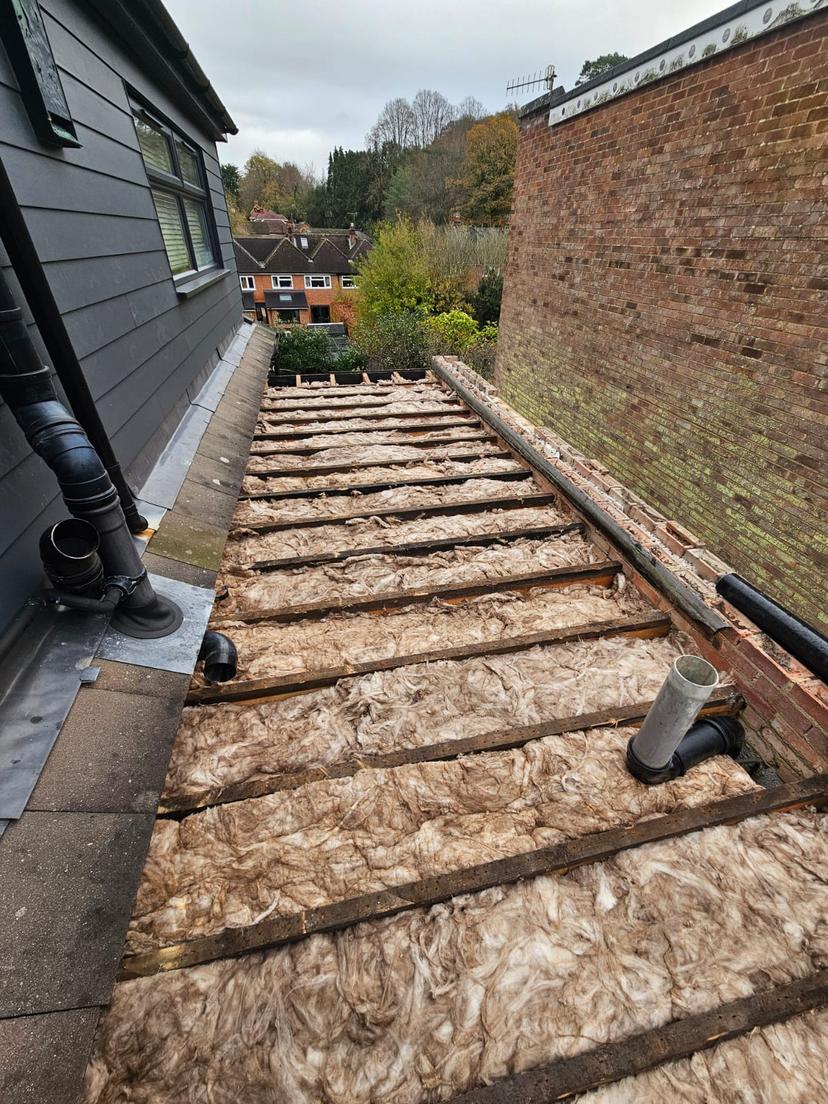
If the flat roof is covered in EPDM rubber, the article on what makes up an EPDM roof explains why the surface is only part of the picture.
Take a careful look in the loft
If you can reach the loft safely with a torch, look at the underside of the roof on a dry day and again after heavy rain. Damp patches on timbers or insulation, drip marks or daylight showing where it should not are worth photographing. Stay on boarded areas or joists, never step onto the ceiling between them, and leave the loft if you are unsure where it is safe to stand.
Two questions homeowners often ask
Should a small problem wait until spring?
It depends on what you have found. Some defects can reasonably be monitored, while others may let water in during a winter of rain and wind and become a larger repair. Describe what you have seen and ask whether it needs attention before winter or can safely wait.
What is useful to send when asking about a repair?
Clear photos taken from the ground or a window, a note of which part of the house is affected, and where any damp has appeared inside. Mention whether the problem gets worse in heavy rain or strong wind. That helps decide what needs to be inspected.
Find out more about general roof repairs, or get in touch with photos of anything you spot during your autumn check.